
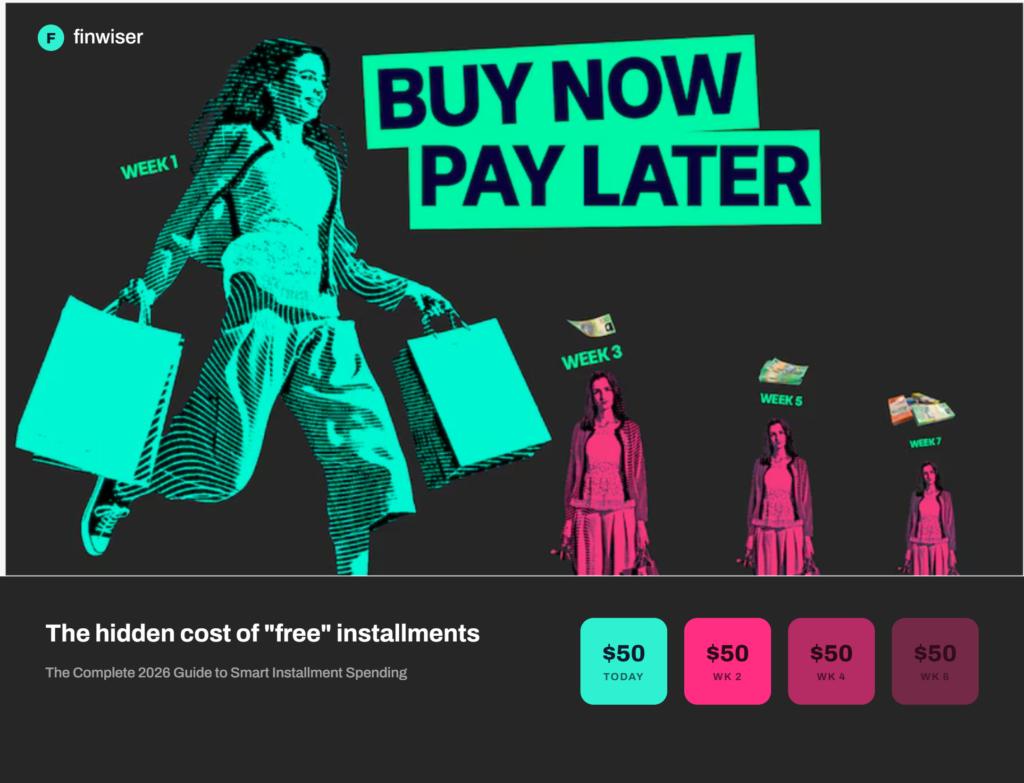
Buy now, pay later feels free at checkout, but stacking a few plans at once can quietly cost you your credit score — a straight look at how it actually works, and how to use it without getting burned.
I’ve spent years working in receivables and collections inside consumer fintech, which is exactly the seat where “phantom debt” becomes visible before it shows up anywhere else — that’s the lens this article comes from.
Buy now, pay later has become the default checkout button at nearly every online store, and it’s easy to see why: a $200 purchase turns into four $50 payments, usually with no interest if you pay on time. That convenience is exactly what makes buy now, pay later so easy to overuse without noticing.
This isn’t an article telling you buy now, pay later is good or bad — used deliberately, it’s a legitimate tool. Used carelessly, especially by stacking several plans across different apps at once, it can quietly damage your credit score and your budget at the same time. Here’s how to tell the difference, and what regulators mean when they call the result “phantom debt.”
Our Wisers Say: Treat every buy now, pay later plan like a bill with a due date, not like “free” money — write it down the moment you open it. If you can’t immediately say how many plans you have open right now, that’s your answer: stop opening new ones until you’ve paid the current ones down.
You Don’t Have to Choose Just One
Here’s the good news: you don’t have to commit to one payment method for life. Most financially healthy shoppers use a mix — a credit card for planned purchases they’ll pay off monthly and want rewards on, debit or cash for everyday spending, and an installment plan only occasionally, for something they’ve already budgeted for.
The real problem isn’t the tool itself. It’s treating an installment plan as free money instead of as debt with a repayment schedule attached — and losing track of how many you have open at once.
At a Glance: Buy Now, Pay Later vs. Credit Cards vs. Debit
Here’s how a typical buy now, pay later plan stacks up against a credit card and paying with debit or cash, side by side, across the factors that actually matter.
| Criterion | Buy Now, Pay Later | Credit Card | Debit / Cash |
|---|---|---|---|
| Interest / cost | Usually 0% if paid on time; some longer plans add interest | Interest accrues on any carried balance, often 20%+ APR | No interest — you can only spend what you have |
| Late fees | Flat fee per missed installment, varies by provider | Late fee plus interest on the balance | None (overdraft risk only if linked to a checking account) |
| Credit score impact | Increasingly reported; missed payments now hurt your score | Reported monthly; builds or damages score based on use | No impact either way — doesn’t build credit |
| Approval process | Soft check or none; near-instant approval | Hard credit check; approval depends on credit history | No approval needed |
| Overspending risk | High — easy to stack multiple plans across apps | Moderate — limited by credit line | Low — limited by account balance |
| Purchase protection | Limited; returns go through the retailer, not the lender | Strong — chargebacks, fraud protection, extended warranties | Minimal, and often slower to resolve disputes |
| Riba / halal status | Fee-based, interest-free plans are generally viewed more favorably; interest-bearing plans are not | Interest-bearing balances are considered riba if carried | No interest involved at all |
| Best for | A single, already-budgeted purchase paid off in weeks | Planned spending you’ll pay in full, for rewards and protection | Everyday spending you want to keep simple |
Breaking Down Buy Now, Pay Later, Criterion by Criterion
Cost and Fees
A standard “Pay in 4” plan charges no interest if every installment lands on time — that’s the whole appeal. But the fee structure shifts fast once you miss a payment: late fees range from a few dollars to a flat percentage of the purchase, and some providers now offer longer-term plans that do carry interest, sometimes comparable to a credit card’s APR.
Credit cards are more transparent about cost upfront — you know the rate — but that cost only kicks in if you carry a balance. Debit and cash have no cost structure at all, because there’s nothing to borrow.
Credit Score Impact
Until recently, this was BNPL’s biggest selling point: it didn’t touch your credit score either way. That’s changing. FICO rolled out new scoring models in late 2025 that factor in installment-loan data, and Experian and TransUnion now receive reporting from major providers like Affirm and Klarna.
In practice, most users see only a small score shift, plus or minus around 10 points, similar to opening any new account. The real risk isn’t one plan — it’s several open at once with payments due on different days, which is where missed payments start piling up.
Overspending Risk
This is where the psychology matters more than the math. Splitting a purchase into four small payments makes the true cost feel smaller than it is — behavioral researchers call this an “empathy gap” between your present self, who wants the item, and your future self, who has to pay for it.
The risk compounds because nothing stops you from opening a second, third, or fourth plan with a different provider the same week. Each one looks small and manageable on its own. Together, they can add up to a real monthly obligation you never consciously agreed to.
A few signs it’s worth pausing and taking stock:
- You can’t list every plan from memory. If you have to check your email or bank app to remember how many are open, that’s the stacking problem in action.
- Payments are due across different weeks. Several overlapping schedules make it easy to miss one without noticing until the late fee hits.
- You’ve used a new plan to cover a payment on an old one. This is the clearest sign the tool has stopped being convenient and started being a debt cycle.
Approval and Access
Part of what makes this easy is how little friction there is to get approved. Most providers use a soft credit check or none at all, weighing your bank activity instead — which means someone who wouldn’t qualify for a credit card can still open several installment plans in the same afternoon.
That low friction is also what makes stacking so easy to fall into by accident. There’s no central system checking whether you already have three other plans open elsewhere, so the only real guardrail is one you set for yourself.
Purchase Protection
Credit cards win clearly here: federal protections make it straightforward to dispute a charge or get your money back on a defective item through a chargeback. With most BNPL plans, a return has to go through the retailer first, and your payments may keep coming due while that’s sorted out.
What Is Phantom Debt?
“Phantom debt” is the term regulators and reporters have used to describe a specific blind spot: because BNPL loans weren’t consistently reported to credit bureaus, a lender evaluating you for a mortgage or auto loan had no way of seeing how many installment plans you already had open. The debt was real — it just wasn’t visible.
That’s starting to change as bureaus bring BNPL data into standard credit reports, but the visibility gap hasn’t closed completely, because not every provider reports, and not every lender uses the new scoring models yet.
The Real Numbers Behind BNPL Stacking
The scale here is bigger than most people assume. According to the Federal Reserve Bank of Richmond, total BNPL transaction value in the U.S. grew roughly 20% a year since 2021, reaching an estimated $70 billion in 2025. A 2025 Consumer Financial Protection Bureau report, cited by Bankrate, found more than 62% of BNPL users were carrying more than one loan at the same time — which is the stacking behavior driving the phantom debt problem in the first place.
Is BNPL Halal? A Quick Note
This isn’t a halal-only article, but it’s a fair question, and worth a straight answer. A standard interest-free “Pay in 4” plan, paid on time, doesn’t involve riba (interest) — you’re repaying exactly what you borrowed, on a fixed schedule, with no markup. That’s generally viewed more favorably than a revolving, interest-bearing product.
Where it gets murkier: longer-term BNPL plans that do charge interest, and late fees that function like interest in practice even if they’re labeled a “fee.” A halal-conscious shopper should stick to standard, on-time-paid installment plans and treat any interest-bearing BNPL option the same way they’d treat a conventional interest-based loan.
5 BNPL Providers to Know
- Klarna — one of the largest global providers, known for its “Pay in 4” and longer financing options.
- Affirm — reports to Experian, and offers both interest-free and interest-bearing plans depending on the purchase.
- Sezzle — pay-in-4 focused, with a credit-building option for on-time payments.
- Zip — widely used for smaller, everyday purchases alongside bigger-ticket items.
- Splitit — splits payments directly against your existing credit card limit instead of opening a new loan.
Where Each Option Wins
Where Buy Now, Pay Later Wins
- Zero interest, if you’re disciplined. A single plan, paid on time, genuinely costs nothing extra.
- No hard credit check. Useful if you don’t want an inquiry on your report for a one-off purchase.
- Forces a short repayment window. Six weeks is harder to drag out than a credit card balance.
Where Credit Cards Win
- Strongest purchase protection. Disputes, fraud protection, and often extended warranties.
- Builds credit consistently. Monthly reporting rewards on-time payment over the long run.
- Rewards and flexibility. Cashback or points on spending you were going to do anyway.
Where Debit / Cash Wins
- Impossible to overspend on. You can only spend what’s actually in the account.
- Zero fees, zero debt. Nothing to track, nothing to miss.
- Simplest for budgeting. No installments to remember across multiple apps.
Which Buy Now, Pay Later Approach Is Right for You?
If you’re disciplined about tracking due dates and only ever use one plan at a time for something already in your budget, buy now, pay later can work fine as an occasional tool. If you’re not sure how many plans you currently have open across different apps, that’s a sign to stop opening new ones until you do.
If you’re building credit history, a credit card you pay in full monthly will do more for your score than any BNPL plan. And if you just want the simplest possible relationship with money, debit or cash removes the decision entirely.
Key Takeaways
- Buy now, pay later is genuinely interest-free if you pay every installment on time — the risk isn’t the product, it’s stacking several plans at once.
- “Phantom debt” refers to BNPL balances that don’t show up on standard credit reports, making it hard for lenders — and sometimes you — to see the full picture.
- Credit bureaus are increasingly incorporating BNPL data, so missed payments can now hurt your score the same way a late credit card payment would.
- A standard interest-free plan, paid on time, avoids riba; interest-bearing or fee-heavy plans should be treated like any other interest-based loan.
- The safest approach: one plan open at a time, tied to a purchase you’ve already budgeted for.
Further reading: NerdWallet’s guide to how buy now, pay later affects your credit score.
More from FinWiser on Credit & Debt: