
Ten money books, one honest guide to which ones are actually worth your reading time this year.
On This Page
- Why It’s Hard to Pick Just One
- Good News: You Don’t Have to Choose
- At a Glance: All 10 Books Compared
- How They Compare, Criteria by Criteria
- Why Financial Education Pays for Itself
- The Real Cost of Skipping These Reads
- A Halal-Aware Reading Note
- Where Each Book Wins
- Which One Is Right for You
- Apps to Pair With These Books
- Key Takeaways
Picking from the best personal finance books 2026 has to offer is harder than it sounds. Walk into any bookstore’s money section and you’ll find dozens of titles repeating the same five ideas in a different order. This guide isn’t about crowning one “correct” book. It’s about matching ten genuinely good ones to where you actually are — paying off debt, starting to invest, or just tired of feeling anxious every time your bank app pings.
None of these are new releases written specifically for this year. What makes them the best personal finance books 2026 readers should reach for is that the advice hasn’t gone stale — index funds and behavioral money traps work the same way now as when these authors first wrote about them.
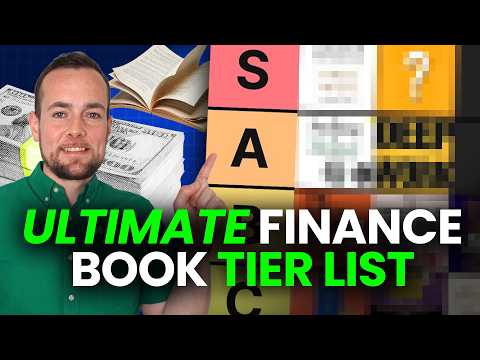
Video: “Ultimate Finance Book Tier List,” Ryan Scribner on NerdWallet’s YouTube channel — his own ranking of the finance books he’d actually recommend. Click to play.
Good News: You Don’t Have to Choose
Here’s the part most “best of” lists skip: you don’t need to pick a single winner. A book about paying off debt and a book about investing psychology solve different problems. That’s why the best personal finance books 2026 picks below mix debt, investing, and mindset titles instead of ranking them 1 through 10 — treat this as a shelf, not a bracket.
The Best Personal Finance Books 2026 at a Glance
Here’s how all ten stack up side by side, color-coded so you can scan for the one that matches your situation.
| Book & Author | Best For | Core Approach | Reading Level | Halal-Aware Fit | Actionability | Approx. Length |
|---|---|---|---|---|---|---|
| The Psychology of Money Morgan Housel | Understanding your own money behavior | Behavioral stories, no formulas | Beginner-friendly | High — no interest-based products discussed | Medium | ~250 pages |
| I Will Teach You to Be Rich Ramit Sethi | Automating a full money system fast | 6-week structured program | Beginner-friendly | Moderate — covers conventional credit cards and index funds | Very high | ~350 pages |
| Rich Dad Poor Dad Robert Kiyosaki | Shifting how you think about assets | Narrative, mindset-first | Beginner-friendly | Moderate — some leveraged real estate examples | Low-medium | ~200 pages |
| The Total Money Makeover Dave Ramsey | Getting out of debt with hard rules | Step-by-step “baby steps” plan | Beginner-friendly | High — debt-free, cash-based philosophy | Very high | ~240 pages |
| Your Money or Your Life Vicki Robin & Joe Dominguez | Redefining your relationship with work and spending | Values-based, life-energy framework | Intermediate | High — spending-mindfulness focus | Medium | ~350 pages |
| The Simple Path to Wealth JL Collins | Long-term, low-effort index investing | Direct letters to his daughter | Beginner-friendly | Moderate — conventional index funds | High | ~280 pages |
| Get Good with Money Tiffany Aliche | Building a full 10-pillar money foundation | Workbook-style, ten pillars | Beginner-friendly | High — heavy emphasis on cash-based budgeting | Very high | ~300 pages |
| Die with Zero Bill Perkins | Spending intentionally instead of over-saving | Philosophy-first, life-stage timing | Intermediate | Moderate — assumes traditional retirement accounts | Medium | ~220 pages |
| The Intelligent Investor Benjamin Graham | Understanding value investing fundamentals | Classic investing theory, dense | Advanced | Low — built around bonds and interest-bearing securities | Low | ~600 pages |
| Friends That Invest Simran Kaur | A first, friendly on-ramp to investing | Conversational, beginner Q&A | Beginner-friendly | Moderate — general index-fund investing | High | ~260 pages |
How the Best Personal Finance Books 2026 Compare, Criteria by Criteria
The table above gives the shape of things — here’s the reasoning behind each column, for the three factors readers ask about most.
Best For
Drowning in debt? Start with The Total Money Makeover or Get Good with Money — both hand you a sequence, not just a philosophy. Paycheck covers the basics but investing feels behind? I Will Teach You to Be Rich, The Simple Path to Wealth, and Friends That Invest get you moving within a chapter. Money stress more about mindset than math? The Psychology of Money, Your Money or Your Life, and Die with Zero address that first. Rich Dad Poor Dad works as a spark for anyone who’s never questioned the “get a job, save, retire” script, and The Intelligent Investor is for readers who already have the basics down.
Halal-Aware Fit
None of these ten were written with an Islamic finance lens, so a halal-conscious reader has to do some translating. The Total Money Makeover, Get Good with Money, and Your Money or Your Life translate most cleanly — pay in cash, avoid debt, spend on purpose lines up with riba-free principles with little adjustment. I Will Teach You to Be Rich, The Simple Path to Wealth, and Friends That Invest lean on conventional interest-bearing accounts in places, so swap those examples for a halal-screened account or shariah-compliant fund. The Intelligent Investor needs the most adjustment of any book on this list of the best personal finance books 2026, since bond analysis is central to Graham’s method.
Reading Level
Seven of the ten — Psychology of Money, I Will Teach You to Be Rich, Rich Dad Poor Dad, Total Money Makeover, Simple Path to Wealth, Get Good with Money, and Friends That Invest — are genuinely beginner-friendly, written in plain language. Your Money or Your Life and Die with Zero sit a step up, asking bigger questions rather than offering a checklist. The Intelligent Investor is the outlier: dense and technical, best saved for after one or two of the others.
Why Financial Education Pays for Itself
A comparison list like this one is really a bet on a simple idea: that a few hours of reading now changes decisions for years afterward. That’s the same logic behind compound interest — small, consistent inputs early on outweigh large corrections made later. A book that gets you to open a retirement account two years earlier, or stops a credit card balance from dragging on for a decade, pays for its own cover price many times over. None of the best personal finance books 2026 has to offer will do the work for you, but each one removes a piece of the confusion that keeps people from starting.
The Real Cost of Skipping These Reads
This isn’t an abstract argument. The National Financial Educators Council’s most recent annual survey found that Americans self-reported losing an average of $948 in 2025 due to a lack of personal finance knowledge — and in the three years before that, the same survey put the figure as high as $1,819 per person in a single year[1]. That’s not money lost to bad luck. It’s the cost of not knowing which fee to negotiate, which account to open, or which debt to pay off first — exactly the gaps these books are written to close.
A Halal-Aware Reading Note
If interest (riba) is a line you don’t cross, read these ten with a highlighter for the parts that assume conventional credit cards, bonds, or interest-bearing savings. The underlying behaviors — budgeting on purpose, avoiding unnecessary debt, investing for the long term — translate well. The specific products named in a few chapters don’t; swap them for a halal-screened brokerage account, a shariah-compliant index fund, or a profit-and-loss-sharing savings product instead, and the rest of the advice still holds.
Where Each Book Wins
The Psychology of Money
- Makes behavior the whole subject. Short stories about real decisions make your own habits easy to spot.
- No math required. Not a single spreadsheet — the easiest of the ten to finish in a weekend.
I Will Teach You to Be Rich
- A literal six-week schedule. Each week has a task, so you finish with accounts actually opened.
- Doesn’t demand extreme frugality. “Spend extravagantly on what you love, cut mercilessly on what you don’t” feels realistic, not punishing.
Rich Dad Poor Dad
- Reframes assets versus liabilities. Buy things that put money in your pocket — a lesson that sticks.
- Short and story-driven. The fastest read here for a first-timer.
The Total Money Makeover
- Removes decision fatigue. Ramsey’s “baby steps” tell you exactly what to do first, second, third.
- Built for debt payoff. If credit card or loan debt is the problem, this is the most direct route out.
Your Money or Your Life
- Connects spending to time. Its “life energy” math — hours of work a purchase actually costs — changes how you shop fast.
- Built for FIRE-minded readers. Still one of the clearest starting points for financial independence.
The Simple Path to Wealth
- Makes index investing boring on purpose. Collins argues boring is exactly what long-term investing should be.
- Written as letters to his daughter. Warm and direct instead of textbook-dry.
Get Good with Money
- Covers all ten financial “pillars.” Budgeting, saving, debt, credit, income, investing — the most complete single-book foundation here.
- Workbook structure. Built-in exercises mean you’re applying each chapter, not just reading it.
Die with Zero
- Challenges over-saving. Dying with a large unspent nest egg is its own financial mistake, Perkins argues.
- Reframes timing. Experiences matter more at certain life stages — a question most finance books skip.
The Intelligent Investor
- The original source for value investing. Warren Buffett has called it the best book on investing ever written.
- Built for readers ready to go deep. Rewards a second and third read more than any other book here.
Friends That Invest
- Demystifies the stock market for beginners. Kaur writes like she’s explaining it to a friend over coffee.
- Short chapters, low intimidation. An easy on-ramp for a reader who’s never bought a share.
Which of the Best Personal Finance Books 2026 Is Right for You
Matching yourself to the right pick comes down to your current problem, not your income level.
Just starting from zero: Start with Get Good with Money or I Will Teach You to Be Rich — both build a full system rather than one skill.
Buried in debt right now: The Total Money Makeover gives you the clearest, most repeatable sequence.
Curious about investing but nervous: Friends That Invest or The Simple Path to Wealth will get you comfortable before you commit real money.
Chasing early retirement or more freedom from work: Your Money or Your Life and Die with Zero pair well together — one teaches you to save with intention, the other teaches you when to stop.
Already investing and want the theory: The Intelligent Investor is the one to save for last, once the basics from the other nine feel automatic.
Apps to Pair With These Books
A book changes how you think about money; an app is what keeps the new habit going after you close the last chapter of any of the best personal finance books 2026 picks above. These five are currently live and worth a look:
Zero-based budgeting that mirrors the discipline in The Total Money Makeover.
Full net-worth and budgeting dashboard, useful once you’ve read Get Good with Money‘s pillars.
iOS-first spending tracker that pairs well with I Will Teach You to Be Rich‘s automation steps.
Finds and cancels forgotten subscriptions — a fast win before you start any of the debt-payoff books.
Free net-worth and retirement-fee dashboard, a natural next step after The Simple Path to Wealth.
Key Takeaways: Best Personal Finance Books 2026
- There’s no single “correct” pick — the best personal finance books 2026 has to offer split cleanly by problem: debt, investing, mindset, or spending.
- The Total Money Makeover and Get Good with Money score highest for actionability if you want a step-by-step plan.
- The Intelligent Investor is the most advanced pick — read it after, not instead of, the beginner-friendly titles.
- Most of these translate well for a halal-conscious reader, but swap out the interest-bearing product examples for shariah-compliant equivalents.
- NFEC data puts the average cost of financial illiteracy at $948 per person in 2025 alone — reasonable justification for the few hours any of these books take to read.
For a second opinion beyond FinWiser’s own picks, the NerdWallet Book Club runs an ongoing series of personal finance book interviews and picks worth bookmarking. And if you’re building out your own reading list alongside FinWiser’s other personal finance guides, this list is a solid place to start.
[1] National Financial Educators Council, 2025 Cost of Financial Illiteracy survey, published via PR Newswire, December 29, 2025.